AI without the Sci-Fi
Let's be real: AI isn't magic, and it's not Skynet. It's just a tool that read the internet and is really good at guessing what comes next. Here's your grounded intro to 2026.

AI without the Sci-Fi
Let's be real for a second. When most of us hear "Artificial Intelligence," we still picture a glowing red robot eye or a futuristic butler that knows exactly what we want before we say it.
But if you've opened ChatGPT or Gemini recently, you know the reality is a bit... weirder. It's impressive, sure, but it also makes stuff up, gets confused by simple math, and sometimes sounds like a confident intern who didn't read the brief.
That's because we've been sold a sci-fi movie, when what we actually bought is a really fancy autocomplete. Here is your grounded intro to AI fundamentals in 2026.
The "Smart Spreadsheet" Metaphor
Here is the single most important thing to understand about the AI tools we have in 2026: They do not "know" anything.
They don't have a brain. They don't have messy childhood memories or strong opinions about pizza toppings. They don't even know that $2 + 2 = 4$ because they understand math. They know it because they've seen "2 + 2 =" followed by "4" roughly a billion times in their training data.

Think of AI less like a digital human and more like a massive, hyper-fast spreadsheet that has read the entire internet.
When you ask it a question, it's not "thinking." It's predicting. It's looking at the words you gave it and calculating, statistically, what word is most likely to come next.
"It's a professional guesser. And 99% of the time, it guesses right."
The Counterpoint
Now, you might be thinking: "Wait, if it's just guessing words, how can it write code or solve riddles?"
Fair question. These models are incredibly complex, and sometimes they display behavior that feels like reasoning. But even when it's solving a math problem, it's not "thinking" in the way you do. It's predicting the next logical step in the pattern based on the millions of math problems it has seen before. It's mimicry at a Ph.D. level.
Why This Matters (And Why It's Good News)
If AI was actually a sentient genius, you'd be in trouble. You'd have to negotiate with it. You'd have to worry if it liked you.
But because it's just a prediction engine, you are in the driver's seat.
This reframing changes everything about how you use it:
- It means you have to be specific. If you give a vague instruction to a spreadsheet, you get a messy error. We call this the "Intent Gap."
- It means you have to check the work. You wouldn't sign a contract written by a junior employee without reading it. Don't do it with AI.
- It means your taste is the asset. The AI can generate infinite text, but it can't tell you if that text is actually good. That's your job.
The Driver's Manual (What to do next)
Knowing you are the driver is one thing. Driving is another. Here is your checklist for every time you open an AI tool:
- Set the Destination: Don't just say "Write an email." Say "Write an email to convince my boss to approve this budget."
- Check the Route: Read the output. Does it make sense? Is it actually true?
- Grab the Wheel: If the AI veers off course (and it will), correct it immediately. "No, not like that. More professional."
Welcome to 2026
We're going to spend a lot of time breaking this down. We're not going to hype you up or scare you.
We're just going to look at the mechanics. Because once you see how the trick is done, it stops being scary and starts being useful.
Don't just read about it. Try it.
You understand the concept. Now see how it works in the real world with this step-by-step guide.
Turn AI Into Your Tutor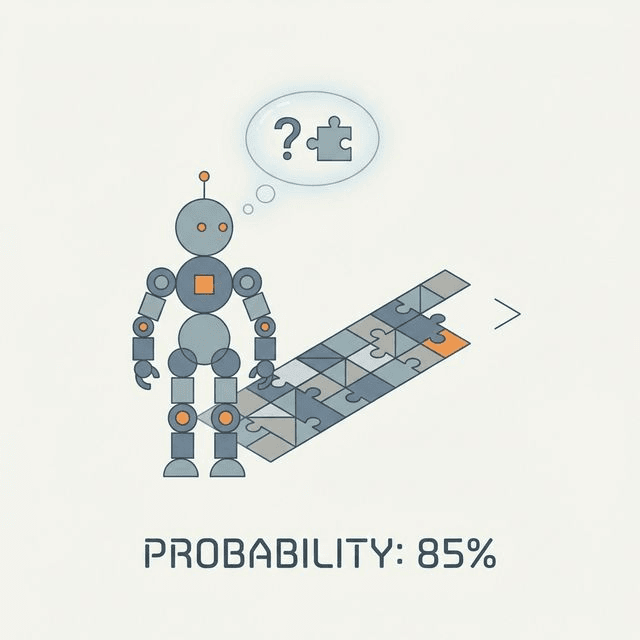
Want to keep learning?
Get our free AI Starter Kit — 5 lessons delivered to your inbox.
Join readers learning AI in plain English. No spam, ever.